The Dangerous Legacy of Charlie Kirk—and What His Death Reveals
Zdravá kultúra (kultúrna kalokaghatia)
Demokratické prostredie + primerané/zmysluplné verejné financovanie
Charakteristika segmentu:
● Charakter kultúry a verejný záujem. Zdravá kultúra funguje ako verejná
infraštruktúra v demokracii. Verejný záujem je definovaný ako dlhodobý rozvoj
spoločnosti, pluralita hlasov, sloboda tvorby, prístup ku kultúre pre rôzne skupiny
obyvateľstva a kultúra ako priestor kritického myslenia. Financovanie nie je cieľom
samo o sebe, ale je nástrojom stability a kvality.
● Verejné inštitúcie. Verejné kultúrne inštitúcie sú odborne autonómne, transparentné
a stabilné. Majú jasné poslanie, profesionálne vedenie a dlhodobé stratégie. Sú
otvorené spolupráci, participácii a medzinárodným výmenám, no zároveň ukotvené v
lokálnom kontexte.
● Umelecká tvorba a jednotlivci. Umelecká tvorba je rozmanitá, kritická,
experimentálna aj tradičná. Jednotlivci nie sú existenčne tlačení k sebaprezentácii
ani k lojalite voči moci.
● Vzťah kultúry a životného prostredia. Kultúra reflektuje environmentálne témy,
udržateľnosť a zodpovednosť. Inštitúcie uvažujú o ekologickej stope, dlhodobosti a
vzťahu k prostrediu.
● Vzťah k národnému. Národné je chápané inkluzívne a otvorene – ako živý proces,
nie ako uzavretý kánon. Národná kultúra je kompatibilná s európskym a globálnym
kontextom.
Prvky v segmente:
● Múzeá ako príklad sektora na sústrednej kružnici: múzeá sú odborné, kritické,
participatívne, pracujú s pamäťou aj súčasnosťou; sú miestom diskusie, nielen
uchovávania.
● Príklad bubliny: uzavretý elitársky kruh odpojený od verejnosti. V zdravej kultúre,
kde je verejný záujem definovaný inkluzívne, môže bublina vzniknúť paradoxne ako
sebestačný, no sociálne izolovaný priestor – napr. umelecká komunita, ktorá síce
produkuje kvalitnú tvorbu, ale komunikuje výlučne sama so sebou. Nezapadá tým, že
oslabuje spoločenský dialóg, nereflektuje širšie publikum, využíva verejné zdroje bez
spätnej väzby.
● Hviezda/divoká karta: náhla systémová kríza mimo kultúry (napr. pandémia). V
zdravej kultúre divoká karta skúša odolnosť systému. Kríza, ktorá nesúvisí priamo s
kultúrnou politikou, preverí, či je kultúra skutočne považovaná za verejný záujem,
alebo je verejným záujmom len v „dobrých časoch“. V tomto segmente divoká karta
odhalí flexibilitu inštitúcií, mieru dôvery medzi štátom, kultúrou a verejnosťou,
schopnosť rýchlo meniť formáty (digitálne, komunitné, hybridné). Systém môže
preformátovať – buď posilniť, alebo ukázať, že zdravie bolo len dočasné.
zhrnutie
Lorem ipsum dolor sit amet, consectetur adipiscing elit. Phasellus sit amet odio nisi. Mauris eu leo molestie sapien tristique posuere sed vel orci. Integer ac facilisis ipsum. Vestibulum et libero tristique, auctor nisl sit amet, posuere ligula. Curabitur eu aliquet nulla. Sed consectetur velit lorem, a fringilla massa molestie nec. Aenean semper risus quis nisi bibendum, at tempus nisi vestibulum.
Shortly after Donald Trump was elected president in 2016, I attended a panel on fascism at Northern Arizona University, gathering scholars from diverse disciplines. Members of the local Turning Point USA chapter were present, recording both panelists and attendees. Afterwards, they published footage and an article via Campus Reform, a conservative outlet closely aligned with Turning Point USA. This exposure led to harassment and death threats directed at panel faculty—a chilling glimpse into the weaponization of right-wing outrage.
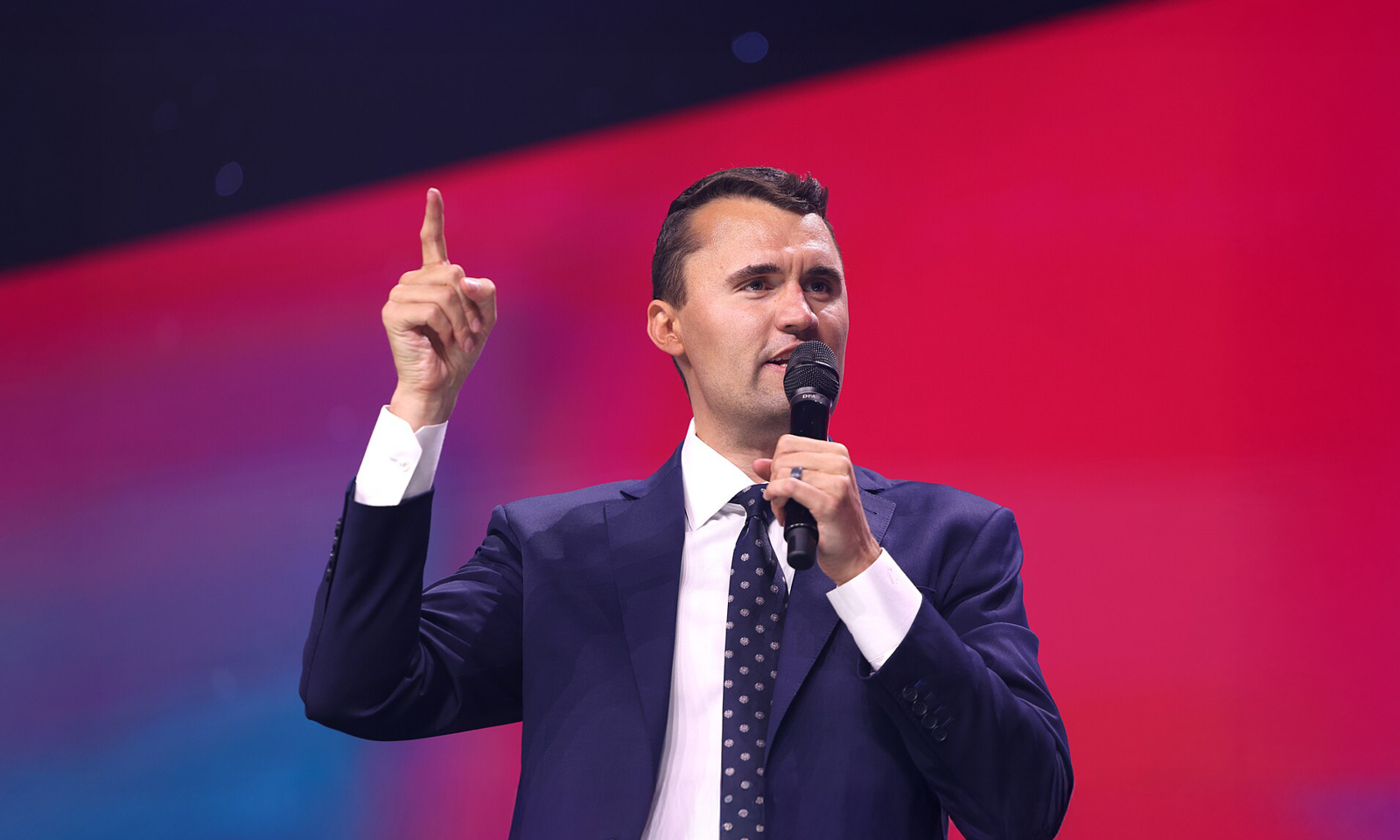
Fast forward: On Wednesday, September 10, Charlie Kirk—founder of Turning Point USA and one of the nation’s most influential far-right organizers—was shot and killed while addressing questions on transgender rights and gun violence at Utah Valley University. No suspect has yet been identified; investigations remain underway.
Kirk’s career was defined by sharp attacks on marginalized communities. He was a prominent critic of gay and transgender rights, a climate change denialist, and an outspoken opponent of the Civil Rights Act of 1964. He trafficked in antisemitic conspiracies alleging that Jews sought to “replace” white Americans through immigration, and he belittled Black women as intellectually inferior, only legitimized by affirmative action. Kirk was also an unwavering supporter of Israeli militarism against Palestinians.
Turning Point USA, under his leadership, maintained a „Professor Watchlist“ targeting women, Black, and queer scholars challenging white supremacy, Christian nationalism, and gun culture. The Watchlist functioned not as a mere database, but as an instrument of harassment—threatening jobs, inviting doxxing and death threats, and fostering a climate of professional intimidation. Kirk profited from this engineered culture of contempt and violence.
Kirk’s influence extended well beyond campus activism. As a close Trump ally, he played a leading role in mobilizing grassroots conservative support for Trump’s successful 2024 campaign. In the immediate aftermath of Kirk’s death, Trump ordered flags at public buildings nationwide flown at half-staff, “as a mark of respect” to Kirk’s memory. He then blamed the “radical left” for the killing, despite the lack of any concrete evidence or identified suspect—further deepening political polarization. For Trump and for those shaped by Kirk’s rhetoric, opposition is synonymous with extremism, and every critic becomes an alleged enemy.
Yet the most devastating forms of political violence are often hidden from headlines, affecting millions whose suffering rarely reaches public attention. Far beyond the spectacle of an assassination or televised tragedy, true political violence manifests in silent policies that cost lives: millions dying prematurely because of inadequate healthcare or generational poverty, immigrants perishing in ICE detention centers, communities shattered by famine, and global acts of genocide enabled or overlooked by powerful governments. The victims of these injustices are numerous and mostly anonymous, their deaths the direct outcome of legislative decisions, budget cuts, and intentionally cruel systems. The destructive impact of these policies far exceeds the violence inflicted on any single prominent figure, revealing the deadly consequences of politics that treat entire populations as disposable.
This moment invites introspection. Charlie Kirk was not simply a figure we “disagreed with,” to be countered by a better op-ed or firmer letter. He was a product and architect of a billionaire-funded far-right movement that is actively rolling back civil rights, targeting reproductive and transgender healthcare, dispatching armed forces to U.S. cities, and systematically eroding democratic safeguards. These actions cannot be dismissed as politics as usual—they are attempts to consolidate authoritarian power.
Kirk’s assassination—regardless of motive—underscores a growing fear across the political spectrum: that America teeters on the brink of renewed civic violence, echoing the national trauma of the 1960s when assassinations fractured the fabric of democracy. Today, right-wing calls for vengeance, paired with consolidated political power and a weak resistance from labor, Democrats, and grassroots movements, threaten an even more rapid descent into authoritarianism.
In times like these, it’s vital to resist the normalization of this violence and the notion that democratic decline is inevitable. The stakes are existential, and the question remains whether citizens and institutions will confront the far-right machinery Kirk helped build—or allow the arc of American history to bend toward repression.
The author is the founder of the Catch Fire Movement, a political consultant, and a former member of the Flagstaff City Council.